Blog

  • Tiled Wave

    mentary blues and greens are arranged in variegated hexagonal patterns to create the large-scale installation. Like an unfurled, multifaceted prism, the appearance of the work will alter with the changing sunlight, seasons of the year, time of day, and positions of passersby. Backlit at night with glimpses of light peering through the tile fissures, the work can also be viewed at dusk and beyond. 

    Atmospheric wave wall was inspired by the environs of the Chicago River across the street as well as nearby Lake Michigan—just a short one-mile walk away past Anish Kapoor’s famous Cloud Gate sculpture (colloquially known as the Bean) and the renowned Art Institute of Chicago. The artist details his motivations and inspiration in a release: “Inspired by the unpredictable weather that I witnessed stirring up the surface of Lake Michigan, Atmospheric wave wall appears to change according to your position and to the time of day and year. What we see depends on our point of view: Understanding this is an important step toward realizing that we can change reality.”

    He's better at these large-scale installations, I'd say – like the Tate Modern's Weather Project in 2003 – than he is at being some kind of cutting-edge artist. 
  • Les Grands Ensembles

    =”display: inline”>Paris11

    Paris12

    Paris14

    Paris15

    Paris16

    Paris17

    Paris13
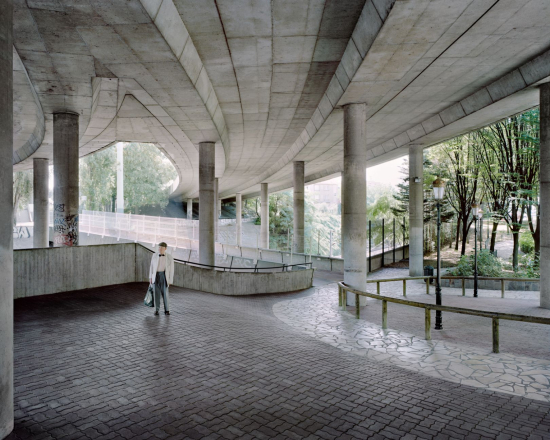
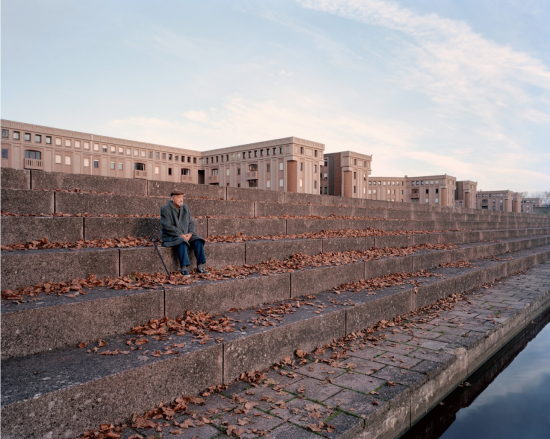
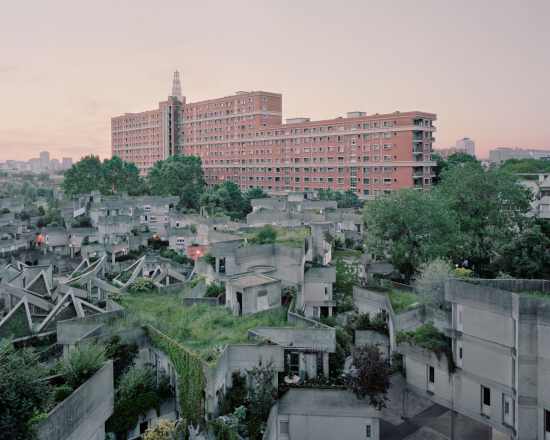
    [Photos © Laurent Kronental]

    It's noticeable that the photographer's chosen only elderly white subjects for his portraits here. I suppose he's not making any claims that this is an accurate presentation of what life's like in these estates – which would in fact, as viewers of Spiral will know, have plenty of North African immigrants. The pictures were taken early in the morning, when the normal ebb and flow of life isn't evident, and the photographer is after that particular feeling of melancholy, and the alienation of this older generation. Well, fair enough. It's his vision…

  • Female-perpetrated abuse

    n the name of trans inclusivity. Not so much a change in human nature as a change in reporting accuracy.

    Update: and see this, from the Glinner Update.

  • By the river

    a3200b img-responsive” src=”http://mickhartley.co.uk/wp-content/uploads/2021/01/mt_imported_image_1758337250.jpg” style=”width: 550px” title=”Chloe_Dewe_Mathews_Thames_Log_02″ />
    Ceremonial Boat Burning, 25/05/2013, 5.00 pm, Oxford

    Chloe_Dewe_Mathews_Thames_Log_03
    Morris Dancing on May Day Morning, 01/05/2013, 8.15 am, Oxford

    Chloe_Dewe_Mathews_Thames_Log_06
    Ganesh Visarjan, 27/09/2015, 6.15 pm, Richmond

    Chloe_Dewe_Mathews_Thames_Log_08
    Mudlarking, 10/01/2015, 10.00 am, Southbank

    Chloe_Dewe_Mathews_Thames_Log_09
    Blessing of the River, 08/01/2012, 1.30 pm, London Bridge

    Chloe_Dewe_Mathews_Thames_Log_12
    Reading the Sunday Papers, 21/08/2011, 4.00 pm, Grays

    Chloe_Dewe_Mathews_Thames_Log_14
    Girls Drinking, 08/05/2012, 6.15 pm, Southend-on-Sea

    Chloe_Dewe_Mathews_Thames_Log_15
    Scattering of Ashes, 23/08/2015, 9.00 am, Southend-on-Sea

    Chloe_Dewe_Mathews_Thames_Log_16-banner
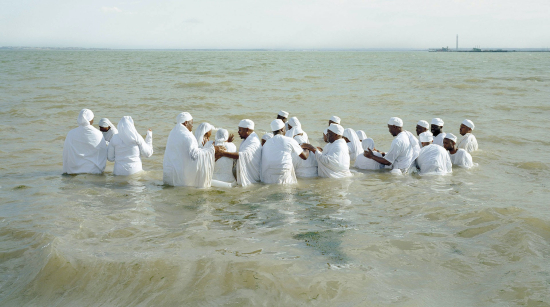
    Mass Baptism, Southend-on-Sea, 23/08/2013
    [Photos © Chloe Dewe Mathews]

  • Milwaukee River

    non-German speakers into their businesses. German businesses made up 3rd street as far south as Wisconsin Ave and as far North as North Avenue with a Schuster's Department store capping off the end of the retail district.

    That large building in the picture was known as the Pabst Building. Constructed in 1891 it was Milwaukee's first skyscraper. It was the tallest building in Milwaukee until the current city hall was constructed in 1895. It was demolished in 1981 and replaced with the Faison Building that stands there today.

  • The law against anti-reactionary thought

    g of books, videos and other materials produced by North Korean authorities, such as propaganda materials.

    In fact, the explanatory materials Daily NK recently obtained lay out the specific “criminal punishments” for consuming or distributing cultural materials from South Korea, the production or distribution of pornography, the use of unregistered TVs, radios, computers or other electronic devices, and the consumption or possession of banned films, recorded materials or books.

    Particularly striking is how much of the law warns against the entry of films, TV programs, music and other cultural materials from South Korea.

    Article 27 of the law calls for sentences of five to 15 years of correctional labor against people caught watching, listening or possessing “films, recordings, publications, books, songs, drawings or photos from South Choson [South Korea],” and life sentences of correctional labor or death for individuals who import and distribute such materials.

    North Korean authorities have also banned the use of South Korean accents or singing styles. Article 32 of the law against reactionary thought calls for disciplinary labor or up to two years of correctional labor for “speaking or writing in the South Chosun style, singing songs in the South Korean style or printing materials using South Chosun fonts.”

    The bans appear to be a response to the growing number of North Koreans who enjoy South Korean culture, including South Korean films, TV programs and pop music.

    In fact, since North Korean authorities stopped inter-regional travel and banned various gatherings in response to COVID-19, North Koreans have reportedly been watching more South Korean TV programs as they spend more time at home….

    The law also calls for controls against cultural materials from the US and Japan. Article 28 laid out punishments for those who consume or import cultural materials from “hostile countries” such as the US or Japan, or materials containing content that “opposes” the North Korean regime. Specifically, the law calls for up to 10 years of correctional labor for these crimes, and even death for importing “a lot of material.”

    A source in the country told Daily NK that the Bible is included among the banned books mentioned in Article 28.

  • Branching out

    Ooh look, more Hampstead trees. On a very muddy morning on the Heath:

    IMG_6543s

    IMG_6537s

    IMG_6551s

    IMG_6571s

    IMG_6575s

    IMG_6577s

  • More banality

    ureaucrat following orders no more, he said, than just a small cog in Adolf Hitler s extermination machine. How was this carefully crafted obfuscation possible? How did a central architect of the Final Solution manage to disappear? And what had he done with his time while in hiding?

    Bettina Stangneth, the first to comprehensively analyze more than 1,300 pages of Eichmann s own recently discovered written notes as well as seventy-three extensive audio reel recordings of a crowded Nazi salon held weekly during the 1950s in a popular district of Buenos Aires draws a chilling portrait, not of a reclusive, taciturn war criminal on the run, but of a highly skilled social manipulator with an inexhaustible ability to reinvent himself, an unrepentant murderer eager for acolytes with whom to discuss past glories while vigorously planning future goals with other like-minded fugitives.

    In fact Eichmann in Argentinian exile continued to be proud of the role he played in the Nazi machine:

    Like many Nazi mass murderers, he possessed a puritanical petit-bourgeois sense of family and social propriety, indignantly denying that he indulged in extramarital relations or that he profited personally from his duties, and yet he lived quite comfortably with the mass killing of Jews. This was so, Stangneth argues, because Eichmann was far from a thoughtless functionary simply performing his duty. He proceeded quite intentionally from a set of tenaciously held Nazi beliefs (hardly consonant with Arendt’s puzzling contention that he “never realized what he was doing”). His was a consciously wrought racial “ethics,” one that pitted as an ultimate value the survival of one’s own blood against that of one’s enemies. He defined “sacred law” as what “benefits my people.” Morality was thus not universal or, as Eichmann put it, “international.” How could it be, given that the Jewish enemy was an international one, propounding precisely those universal values?

    In the trial in Jerusalem Eichmann cynically invoked Kantian morality, but as a free man in Argentina he declared that “the drive toward self-preservation is stronger than any so-called moral requirement.” Kantian universalism was diametrically opposed to his racially tinged völkisch outlook. He had been a “fanatical warrior” for the law, “which creates order and destroys the sick and the ‘degenerate,’ ” and which had nothing to do with humanist ideals or other weaknesses. From a surprising admission of German inferiority — “we are fighting an enemy who . . . is intellectually superior to us” — it followed that total extermination of the Jewish adversary “would have fulfilled our duty to our blood and our people and to the freedom of the peoples.”

    Arendt was scornful of the Eichmann trial in Israel, arguing that the deluded Jewish authorities had merely captured a pathetic bureaucrat, rather than some Nazi monster. But it was Arendt who was deluded. She was completely taken in by Eichmann's claims to be a merely a cog in the machine, just obeying orders. The Israelis weren't so easily fooled.

    Not perhaps a very good judge of character, Arendt. Especially when you consider her affair as a student with the appalling Martin Heidegger, with whom she renewed her relationship after the war despite his enthusiasm for the Nazis.

  • The war on cats

    ng-left: 40px”>North Korea deployed the so-called Storm Corps (11th Corps) and Seventh Corps to the Sino-North Korean border last June. In August, the Ministry of Social Security proclaimed that people or animals illegally entering the buffer zone between North Korea and China would be “fired upon” without warning….

    North Korea’s hardline response is continuing into the new year. Local residents of Pochon County, Yanggang Province, spotted soldiers shooting at birds flying in from China on Jan. 2. There has even been an instance of someone being shot to death by soldiers as they strolled along the border looking for food.

    “Now they are forcing even local residents to kill animals,” said the source. “They are also spreading [the idea] that cats coming from China could carry the coronavirus.”

    A growing number of people are expressing outrage over these “never-ending” orders to “kill.”

    North Koreans are also criticizing the order as “irrational,” the source said. 

    Some locals have even taken to sarcasm, darkly noting that while “animals can’t talk, they know where there are lots of things to eat,” and are asking why cats would even come to North Korea because “there’s not even enough food for people” to eat.

  • Industrial perspective

    John Vachon – October 1941. "General Motors Fisher Body Ternstedt Division manufacturing plant. West Trenton, New Jersey."

    image from www.shorpy.com
    [Photo: Shorpy/John Vachon]