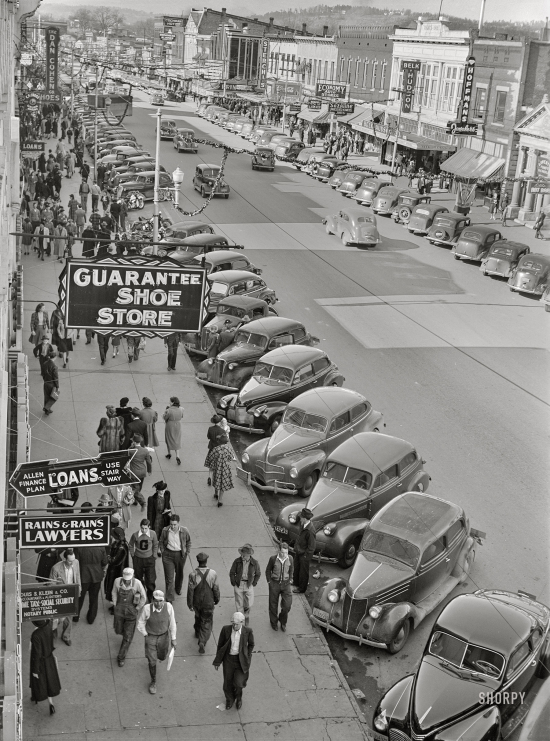
John Vachon – December 1940. "Christmas shopping crowds. Gadsden, Alabama."
[Photo: Shorpy/John Vachon for the Farm Security Administration]
John Vachon – December 1940. "Christmas shopping crowds. Gadsden, Alabama."
[Photo: Shorpy/John Vachon for the Farm Security Administration]
ephotography.org/intro2.asp?isvertical=0″>Structure Photography, where you can read more about the individual photographs, and even get a map reference.
look weak, and adds to the sinking feeling that this is not someone who's going to be leading the Labour Party to victory anytime soon.
Update: Daniel Finkelstein's latest column in the Times is very much to the point, though he doesn't mention this particular episode:
If a leader can’t win by being true to themselves then they can’t win….
Keir Starmer is a successful liberal lawyer. He is a southerner, a graduate and a London MP who lives in his constituency. These are all good qualities and are accompanied by an impressive intellect, a pleasing personal manner and the experience garnered during a distinguished professional career.
Letting Starmer be Starmer is letting Starmer be someone with much to recommend. Yet instead he has become a leader who’s afraid of being himself and wishing to be seen as someone else. He has become the advocate of abstention and the prince of the withheld punch.
He desperately wants to be the voice of the red wall seats for whom he is not the authentic voice. And voters can see it. In focus groups they call him “Mr Man-on-the-fence” and say that he only jumps off the fence to climb onto a passing bandwagon.
If he really was the Labour leader to get back that red wall, he'd have stood firm. "Going to that church doesn't mean I endorse all their beliefs. Obviously." But he's not that sort of politician.
>
"The number of Uyghurs in Xinjiang rose from 10,170,000 in 2010 to about 12,720,000 in 2018. This is an increase of more than 25 percent. This figure is much higher than the 2% population growth of the Han Chinese in Xinjiang during the same period. So, where did the talk about racial genocide come from? […]
"The Palestinian ambassador to China said, after visiting Xinjiang, that there are several mosques on one street. Xinjiang is making continuous efforts to improve public services in mosques, especially providing service to all Islamic clerics, in the fields of training, Quran interpretation, radio, television, and medicine.
"So where did the talk about religious persecution come from? Some two million new jobs were created in Xinjiang in the past five years. This is an increase of more than 17 percent. Workers from different nationalities can choose their occupation freely. Their rights, interests, and gains are guaranteed.
"So where did the talk of forced labor come from? On the contrary, we find that some Western countries have implemented the policy of dissolving the indigenous population in their official historical narrative. As a result, many children were forced to convert to Christianity and learn English. Conversely, the cultures and languages of all the nationalities in Xinjiang were left intact."
olated terror attacks in China became a pretext for the targeting of its Muslim populations, and it was in this context that the “re-education camps” were built.
Western governments don’t go anywhere near China’s lengths, of course, but their policies reflect the same Islamophobic principle that situates Muslims along a “pathway to radicalisation”. And while critical of Beijing, they lend their support to harsh policies elsewhere in the name of fighting “terrorism”…
For the west to generate political pressure on this point, its own anti-Muslim practices need to end. We need to delegitimise our own failed and counterproductive war on terror and the global securitocracy it has given rise to – and situate criticisms of China within that effort. The west’s complicity in China’s crimes is to its shame, but also provides an avenue to exert influence in a more positive direction. Of course, western hawks are unlikely to embrace this perspective, but there are many potential allies who will, including in Muslim-majority countries.
That would be those Muslim-majority countries that have so conspicuously failed to offer any criticism to date of the Uighur genocide? I believe it would. Well, there aren't any others.
And what would these new policies entail, exactly? – apart, that is, from ending our own anti-Muslim practices and delegitimising our failed and counterproductive war on terror, thereby sending a powerful and sobering message to Beijing. It's a little unclear:
The stalemate surrounding Xinjiang calls for ambitious thinking. If the west is capable of launching a global war on terror, why should it not be able to organise a similarly global campaign to undo the damage that war has done? This is what we should be calling on our politicians to lead, and they should be pressing China to join it.
A global campaign to undo the damage that war has done? Brilliant. China will eagerly join this new band of brothers, of course. And we'll all live happily ever after.
The Chinese genocide of the Uighurs linked to the UK's anti-terrorism Prevent programme. Only in the Guardian…
[David Brophy is, god help us, a senior lecturer in modern Chinese history at the University of Sydney.]
From the Times – Doctors who mix up sex and gender ‘put patients at risk’
Doctors who deliberately confuse sex and gender are putting the treatment of some patients at risk, suggests research.
It says sex and gender are not the same and medical staff who do not make the distinction could make treatments for groups such as transgender patients ineffective or inappropriate.
Recognising the difference is “critical” for good health care and medical professionals need to ask the right questions or errors could be made that will lead to “avoidable harm”.
The study, published in the British Medical Journal, has been led by senior medical researchers at St Andrews University with decades of experience in gender and sex issues.
It says a distinction between sex and gender is made by the World Health Organisation, with sex relating to biology and gender to societal roles but, the researchers conclude, current medical practice often uses the two terms interchangeably….
Dr Margaret McCartney, of St Andrews University’s medical school, said: “There are many instances of sex and gender being confused by the research community and society more broadly.
“Unless we identify and count categories correctly, we will end up with errors which serve all populations poorly, including minority populations.”
Researchers say sex relates to biology: chromosomes, hormones, and reproductive cells and organs. Gender relates to a sense of self, behaviours and expectations that may conflict with biological sex and may vary over time.
Well indeed. A trans man, for instance – identified as male by gender – still has a cervix. And that cervix can still develop cancer, however strongly the individual may believe in his new gender identity. That's what's known as biological essentialism – and, medically, it matters.
Unfortunately the Times reporter falls into the trap:
Problems can arise in the appropriate treatment of transgender patients who may be on long-term hormone therapy with oestrogen or testosterone to change their biological sex.
Um…no. Their biological sex doesn't change. It can't change. More biological essentialism, I'm afraid.
nt-size: 11pt”>That genocide was barely covered by the media. This time, the miserable scenes of death and horror in the mountains moved those who watched it and encouraged MPs of all parties to demand action.
The British people’s tremendous generosity gathered 1,100 tonnes of provisions for the Kurdistanis. I helped British Aid for the Kurds secure an Iranian 747 to take some to the mountains….
Labour’s Ann Clwyd mesmerised the Commons with her eye-witness account of five days with the Kurdistanis. They were, she said, freezing by night and bitterly cold by day in the clothes they were wearing when they fled and in makeshift tents like the thin plastic laundries use. She concluded that “Saddam Hussein is still killing, killing, killing, in Iraq. This is genocide, and it calls for an international response.”
The routine diplomatic response was to say that this was an internal affair while the UN passed vacuous resolutions. But the new Prime Minister, John Major, rejected such hand-wringing.
Four hundred people gathered in Glasgow where the organiser read a message from Major: “…my thoughts will be with you and the people of Iraq who have fled to escape the brutality of their own government.” Conservative Prime Ministers don’t usually send messages to demonstrations.
Major took the issue to his Cabinet on 21 March, incidentally Kurdish New Year, and through a series of canny, innovative, and morally courageous moves persuaded the Europeans and then the Americans to stay rather than go.
He proposed a safe haven and no-fly zone. He writes in his autobiography that “failure would simply have been a political embarrassment; for the Kurds, it would have meant almost certain death for tens of thousands. I never had a shred of doubt that it was right to proceed.”
The safe haven was policed for 12 years by US and UK forces, with the French at the beginning. Without that, Kurdistanis would have been exterminated.
We would not now have a decent Kurdistan Region in Iraq as a safe haven for Christians and other minorities. The Kurdistanis would not have accelerated Iraq’s transition from dictatorship to democracy after the invasion of 2003, though there is a long way yet to go.
Nor would Britain have allies in the Kurdistani Army, the Peshmerga, that repelled the so-called Islamic State (Isis) when it sought to capture Iraq and Syria. If the Kurdistanis hadn’t resisted them, with the support of the RAF, Isis could have had captured Iraq’s oil and arms. They would now be stronger and there would be more terrorist murders on our streets.
The US dithering was certainly a betrayal of the Kurds and the Shias, but was due in part to a concern about Iran exploiting a weakened leaderless Iraq. Colin Powell: “Our practical intention was to leave Baghdad enough power to survive as a threat to Iran that remained bitterly hostile toward the United States.” Of course after the second Gulf War, when Saddam was finally overthrown by Bush junior, that was exactly what happened as Iran took full advantage of the Allies' too-hasty withdrawal.
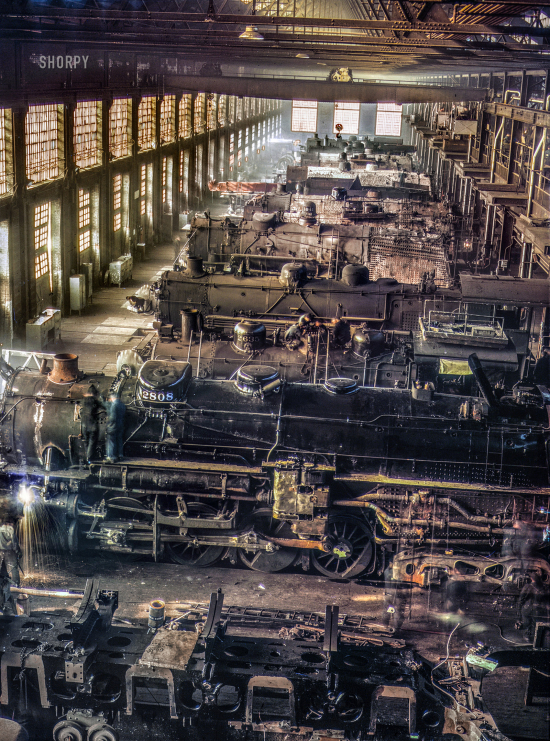
Early Kodachrome from Jack Delano – December 1942. "40th Street Shops (Chicago & North Western locomotive shops at Chicago)."
[Photo: Shorpy/Jack Delano for the Office of War Information]
Photos from this year’s Bird Photographer of the Year contest, at Colossal:
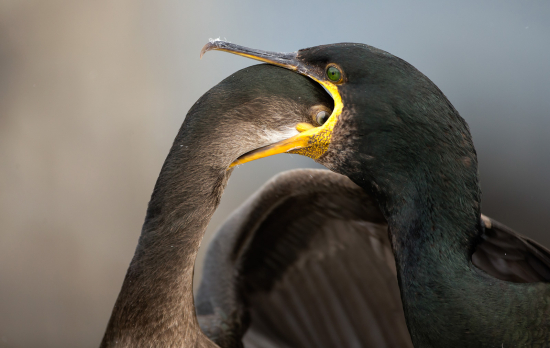
Image © Brian Matthews, European shag.
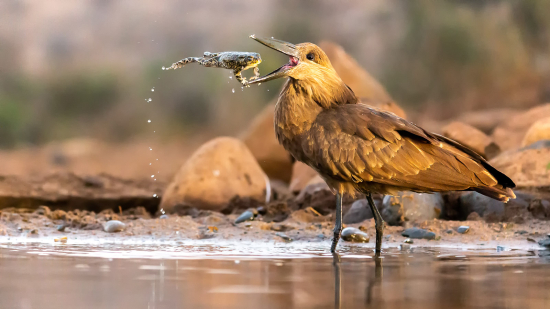
Image © Daniel Zhang, hamerkop

Image © Mark Williams, Eurasian nuthatch
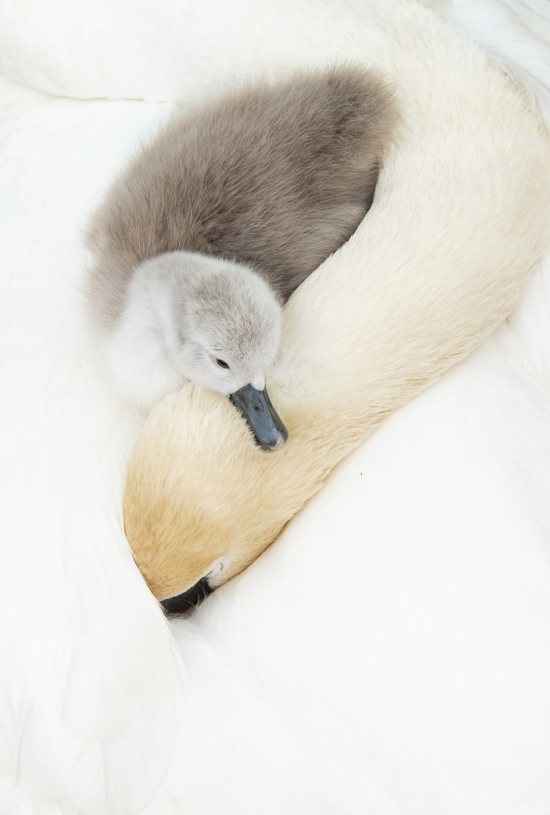
Image © Andy Parkinson, mute swan
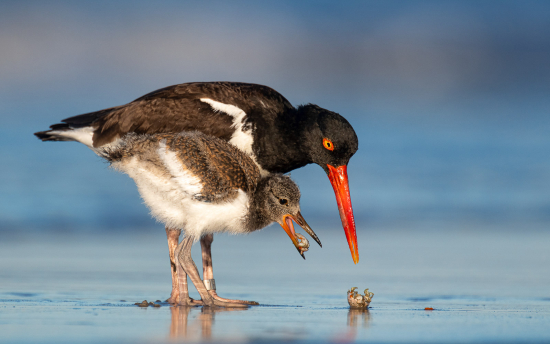
Image © James Wilcox, American Oystercatcher
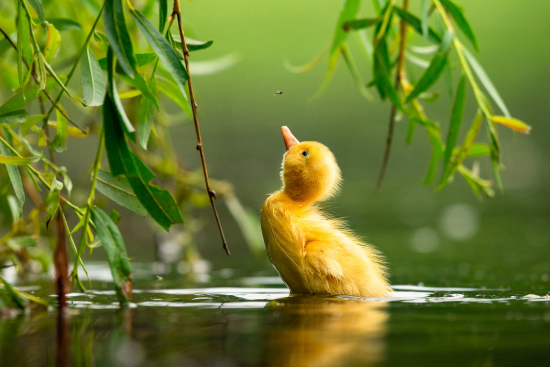
Image © Zdeněk Jakl, mallard duck
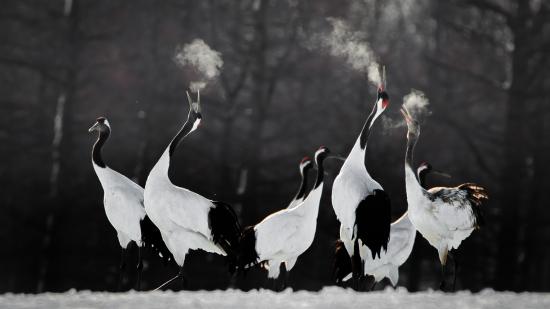
Image © Li Ying Lou, red-crowned cranes
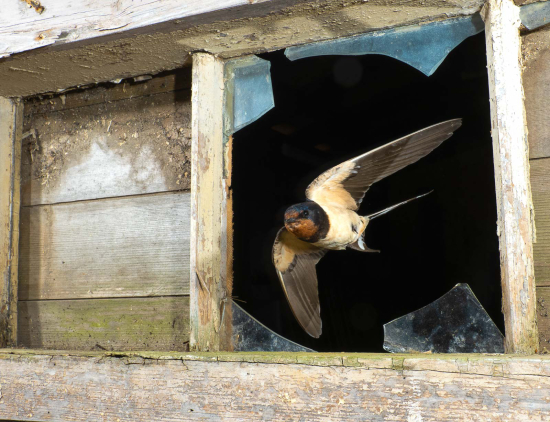
Image © David White, swallow
[All photos © Bird Photographer of the Year]
t their sons’ lives will be improved by hormones or surgery. Yet their meetings are clandestine, and the sense of fear they live with frightens me: the spectre hanging over these proceedings is hyper-liberalism at its most intolerant.
In other words they fear, no doubt with justification, that they'll be branded as reactionary transphobes should they open up about their concerns. Meanwhile their sons are encouraged to proceed down a path of irreversible medical intervention that they may very well come to regret, when what they really need is some understanding, and perhaps some professional help with proceeding through puberty and accepting themselves as boys.