Blog

  • Ghost mining town

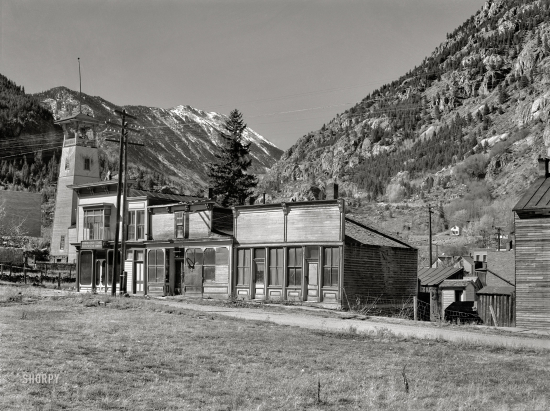
    Arthur Rothstein, October 1939, in Georgetown, Colorado:

    image from www.shorpy.com
    "Georgetown, Colorado — an old mining town in the mountains."

    image from www.shorpy.com
    "Georgetown, Colorado. Ghost mining town."

    image from www.shorpy.com
    "Georgetown, Colorado. Silver mining town ghost town."
    [Photo: Shorpy/Arthur Rothstein]

    Founded in 1859 during the Pike's Peak Gold Rush, Georgetown rapidly became a centre for silver mining, reaching its heyday in the 1880s when its population exceeded 10,000, and a movement arose briefly among local citizens to move the state capital there from Denver. It was long past its prime by the time Rothstein took these photos, with a population down to the hundreds.

    Now it's a popular tourist destination.

  • This is genocide

    ulation. Again this is a leader who prides himself on his outspoken criticism of the West's supposed mistreatment of Muslims.

    Rahima Mahmut's Uyghur Solidarity UK is here.

  • Jattendrai Swing

    ion camps. In France, they were used as slave labour on farms and in factories. During the Holocaust an estimated 600,000 to 1.5 million Romani throughout Europe were eventually killed.

    Hitler and Joseph Goebbels viewed Jazz as un-German counterculture. Nonetheless, Goebbels stopped short of a complete ban on Jazz, which now had many fans in Germany and elsewhere. Official policy towards Jazz was much less strict in occupied France, according to author Andy Fry, with jazz music frequently played on both Radio France, the official station of Vichy France, and Radio Paris, controlled by the Germans. A new generation of French Jazz fans, the Zazous, had arisen and swollen the ranks of the Hot Club. In addition to the increased interest, many American musicians based in Paris during the thirties had returned to the US at the beginning of the war, leaving more work for French musicians. Reinhardt was the most famous jazz musician in Europe at the time, working steadily during the early war years and earning a great deal of money, yet always under threat.

    Reinhardt expanded his musical horizons during this period. Using an early amplification system, he was able to work in more of a big-band format, in large ensembles with horn sections. He also experimented with classical composition, writing a Mass for the Gypsies and a symphony. Since he did not read music, Reinhardt worked with an assistant to notate what he was improvising. His modernist piece "Rhythm Futur" was also intended to be acceptable to the Nazis…

    1943 also saw the tide of war turning against the Germans, with a considerable darkening of the situation in Paris. Severe rationing was in place, and members of Django's circle were being captured by the Nazis or joining the resistance.

    Reinhardt's first attempt at escape from Occupied France led to capture. Fortunately for him, a jazz-loving German, Luftwaffe Officer Dietrich Schulz-Köhn, allowed him to return to Paris. Reinhardt made a second attempt a few days later, but was stopped in the middle of the night by Swiss border guards, who forced him to return to Paris again.

    Unlike the estimated 600,000 Romani people who were interned and killed in the Porajmos [the Romani genocide], Reinhardt survived the war without incident.

    One of his songs, 1940's "Nuages", became an unofficial anthem in Paris to signify hope for liberation. During a concert at the Salle Pleyel, the popularity of the song was such that the crowd made him replay it three times in a row. The single sold over 100,000 copies.

    Nuages here.

    Reinhardt, like many French cultural heroes (Jacques Brel, for instance, or Georges Simenon) was actually born in Belgium. He died in 1953, aged just 43. Stéphane Grappelli died in 1997, having had something of a career revival in the 1970s.

  • Gender problems down under

    d became a wealthy industrialist and property developer. On the other side his son Jeffrey, now Jessica, who was supported by his father all his life, but who became enraged when that support didn't extend to paying for his son's – or rather daughter's – gender-affirming surgery.

    Throughout his life, every scheme Jessica Joss attempted had ended in failure. At age 28, he re-traumatized his father, a Czechoslovakian Holocaust survivor, by moving to Germany. At age 30, he moved to the US, where his attempt to join the marines ended in back injury. He entered a marriage with a woman that soon ended in divorce. Despite lack of relevant skills, he went to Tajikistan at age 40 with the hopes of fighting with the Northern Alliance against the Taliban, and taking a job with the Iranian government’s foreign affairs department. Over the years, in each of these situations, he would run out of money, and his father would fund his trip home.

    Peter Solly Joss, a prominent industrialist and property developer, provided his son a weekly allowance of $800, and paid off any credit card debt he amassed. He told his son he would be cut off from the allowance if he followed through on his plan to undergo gender-affirming surgery.

    Angered by his father’s decision, the younger Mr Joss deliberately embarrassed his Orthodox Jewish parents by standing up in synagogue and announcing his transgender identity to the congregation.

    Mr Joss additionally made plans to carry out a revenge murder-suicide. In 1999, he armed himself with a crossbow with the intention of killing his father at a bar mitzvah before killing himself. A neighbor heard him sharing his plans and warned the parents by phone. Police arrested Mr Joss, and he was involuntarily committed to a psychiatric facility at the request of his father, who refused to press charges.

    The elder Mr Joss passed away in 2017. He left his estate of $12.4 million to his wife, Judith. He had made it clear to his son shortly before his death that he had given him enough. 

    But there's a happy ending! The son appealed against the will, and the Victoria Supreme Court awarded the son $3.225 million, and additionally provided for him to receive $100,000 for his gender-affirming surgery. 

    Justice Hollingworth found that Peter Joss had enabled his son to become financially dependent on him, rendering Jessica Joss perpetually unemployable. Thus, he owed the son a moral duty to sustain him for the rest of his life, the judge concluded.

    The judge addressed the tension in the family. “The fact that, even now, her family do not really understand and accept that she identifies as a woman, has no doubt been (and continues to be) extremely hurtful to her,” the judge said. “Judith continues to refer to Jessica as Jeffrey, and to use male pronouns when speaking of her. That rejection of her identity has, understandably, been very painful for Jessica."

    A commendably brave stance against transphobia by the judge there. How can the mere threat of a murder/suicide compare to the pain of being misgendered?
  • The Battle of Lewisham

    =”asset asset-image at-xid-6a00d83451ebab69e2026bde8975ad200c img-responsive” src=”http://mickhartley.co.uk/wp-content/uploads/2020/08/mt_imported_image_1758339364.jpg” style=”width: 550px” title=”Lewisham13″ />
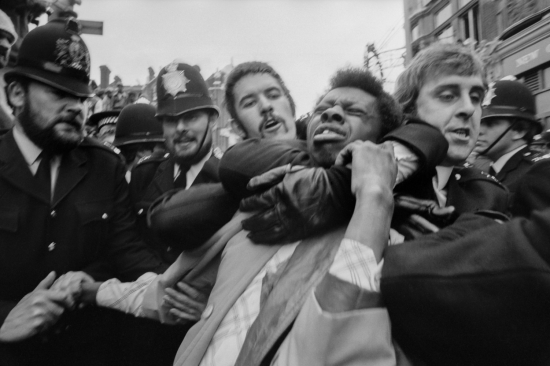
    © Peter Marlow | Magnum Photos

    Lewisham14
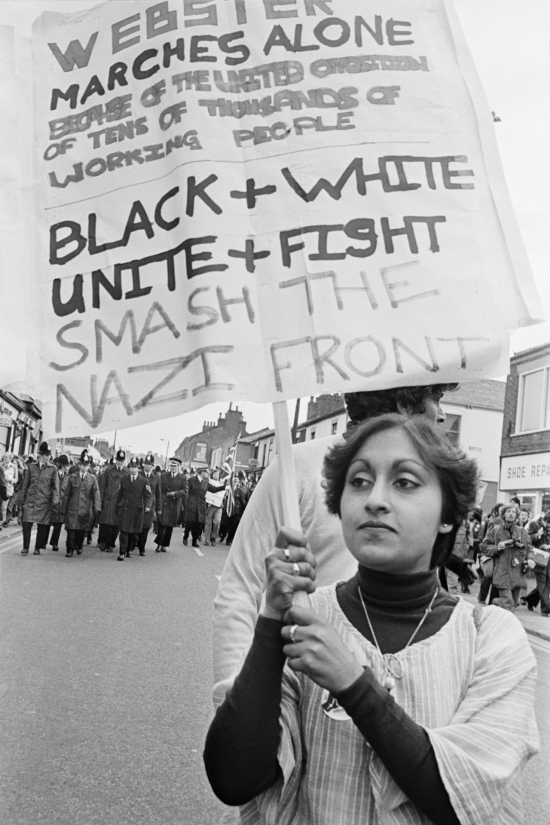
    Rioters held back by police at National Front Demo. © Chris Steele-Perkins | Magnum Photos

    Lewisham15
    © Peter Marlow | Magnum Photos

    Lewisham16
    Police making an arrest. © Peter Marlow | Magnum Photos

    Lewisham17
    Police march in line at National Front Demo. © Chris Steele-Perkins | Magnum Photos

    Lewisham18
    Boys lined up at a National Front Demo. © Chris Steele-Perkins | Magnum Photos

    Lewisham20
    © Chris Steele-Perkins | Magnum Photos

  • Ideologically corrupt to the core

    More news from North Korea, where imitating dance moves from a South Korean boy band can get you in a whole lot of trouble:

    Three North Korean soldiers in their 20s were transported back to their military base on their way to Mt. Baekdu for having imitated a dance to South Korean boyband Bangtan Sonyondan (BTS)’s “Blood, Sweat & Tears.”

    According to a Daily NK military source on Tuesday, the incident occurred at Sokhu Station in South Hamgyong Province during the evening of Aug. 5. After a train heading from Pyongyang to Hyesan suddenly stopped in its tracks due to a power outage, the three soldiers, who are part of the country’s Army Air and Anti-Air Force, imitated the dance during a “party” thrown as the train remained idle. Then, Defense Security Command (DSC) officers who were watching the dancing suddenly “grabbed the three soldiers and took them away.”

    Following a decision by two officers from the General Political Bureau and DSC, the three soldiers were transported back to their base by security officials at Sukhu Station. Their alleged crime was “imitating a corrupt dance from South Chosun [South Korea] while heading [to Mt. Baekdu] to learn about the revolutionary spirit of patriotic martyrs.”

    The three soldiers were reportedly “model soldiers,” which led to surprise among their fellow soldiers that they had been deemed by the authorities as “ideologically corrupt to the core.” […]

    There are rumors that the soldiers could face, at minimum, six months hard labor along with demotions; the worst case scenario is that they could be handed a dishonorable discharge.

    There are also questions surrounding how the DSC officials were able to accurately discern that the dance came from a BTS song. This, however, “is not likely to become an issue” given that there is a special department within the agency that “watches foreign-made videos three hours once per week,” according to the source.

    So that's OK then.

  • Protecting the country against capitalist decadence

    A few weeks back we heard about the dog meat restaurants in Pyongyang, and the efforts by local officials outside the capital to search out supplies. Dog meat has long been a staple of Korean cuisine, albeit contentious nowadays because of western influence.

    The issue is compounded in the North by large-scale food shortages. It would seem, then, to be a propitious moment to denounce the keeping of pet dogs by the Pyongyang elite as a decadent western tradition. Into the pot with them!

    From South Korea's Chosun Ilbo:

    North Korea has launched a clampdown on the ownership of pet dogs among the Pyongyang elite as food supplies run short.

    Trumpeted as protecting the country against capitalist "decadence," the move appears aimed at appeasing increasing public discontent amid the dire economic situation.

    According to a source, North Korean leader Kim Jong-un issued a ban on pet ownership in July, denouncing it as "a 'tainted' trend by bourgeois ideology."

    "Authorities have identified households with pet dogs and are forcing them to give them up or forcefully confiscating them and putting them down."…

    Pet owners are "cursing Kim Jong-un behind his back," but there is little they can do, according to the source.

    Animal rights are even lower on the regime's agenda than human rights….

  • A brand of overpriced junk food

    Back in the day, criticism of government, on social media or indeed anywhere else, would either have been ignored in Whitehall, or countered with some anodyne statement from a hack about "regretting that such-and-such felt it necessary to comment on this complex issue" but, you know…life, and government, must carry on as best we see fit.

    Not any more. Ben and Jerry, ice-cream suppliers to the socially-aware wealthy, have waded in on the migrant issue for reasons best known to themselves, but presumably secure in the belief that a bit of virtue-signalling, with minimum chance of a comeback, would go down a treat with their customers:

    On Tuesday, the official Ben and Jerry's UK Twitter account posted several tweets tagging the home secretary, which began: "Hey @PritiPatel, we think the real crisis is our lack of humanity for people fleeing war, climate change and torture."

    It added: "People wouldn't make dangerous journeys if they had any other choice."

    The account also tweeted: "People cannot be illegal."

    The response was unexpectedly robust:

    But a Home Office source replied: "Priti is working day and night to bring an end to these small boat crossings, which are facilitated by international criminal gangs and are rightly of serious concern to the British people.

    "If that means upsetting the social media team for a brand of overpriced junk food, then so be it."

    Fair enough. If we've learnt anything about Priti Patel recently, it's that she doesn't shy away from a fight.

    Also:

    As highlighted by the Guardian in 2018, the US branch was the target of a campaign by migrant workers on dairy farms which supplied Ben & Jerry’s – some of them illegal immigrants – over poor working conditions. Workers were housed in barns and unheated trailers and reportedly worked 12 to 14 hour days. Basic rights such as real beds (rather than straw piles) and payment of the minimum wage had to be fought for.

    It takes some nerve for a company whose suppliers treated migrants like cattle to engage in moralistic grand-standing on migration.

  • The end of secularism?

    claimed to have vanquished Atatürk. The father of Turkish secularism, whose contempt for Islam had been matched only by his admiration for the model of modernity provided by Europe, had consciously sought to wrest his country from the hold of its history. Now, no less consciously, Erdogan is engaged in a mighty effort to redeem Turkey from secularism, and restore it to the embrace of its Islamic past.

    All of which should serve as a wake-up call to the West that it is not only its financial, economic and military muscle that is currently atrophying. So too is its ability to market its culturally conditioned assumptions as universal. The concept of the secular is not, as many in West like to think, a neutral one. Quite the opposite. As the very word betrays, it derives from the distinctive theology and history of Latin Christendom: for ‘saeculum’, the word given by the Romans to the endless flux of things, was counterpointed by St Augustine and his heirs to the religio, the ‘bond’, that, so Augustine had taught, joined the pilgrim Church on its journey through the centuries to the radiant eternity of the City of God.

    Over time, these two words had evolved to become words in the language that the British had then exported to India, and around the world. That there existed things called ‘religions’ — ‘Hinduism’, ‘Islam’, ‘Judaism’ ­— and that these functioned in a dimension distinct from entire spheres of human activity — spheres called ‘secular’ in English — was not a conviction native to anywhere except for Western Europe. None of which had prevented it from proving an astoundingly successful export: no less influential in Atatürk’s Turkey than in Nehru’s India. Long after the collapse of Europe’s empires, its colonisation of elites around the world endured.

    Yet if the West, over the duration of its global hegemony, had proven itself skilled in the art of repackaging Christian concepts for non-Christian audiences, then the spread of secularism inevitably depended for its success upon the care with which it covered its tracks. Those tracks, as the era of Western hegemony slips away, are becoming ever more evident. Modi and Erdogan have certainly spotted them. The summer of 2020, notable as it already is, will surely be remembered by historians of the future as a key waystop on what is likely to prove perhaps the key narrative of the 21st century: the decline of the West and the rise of a multi-polar world.The temple of Lord Rama and the mosque of Ayasofya will stand as monuments to a changing of the global guard.

    Well, the decline of the West has been predicted regularly ever since Oswald Spengler set the ball rolling 100 years ago. It hasn't happened yet. And isn't China – fervently anti-religious China – supposed to be next in line for world hegemon?

    But yes, secularism, along with Western liberalism, is not having a good time at the moment. And it's always salutary to be reminded how much of these core Western values derive ultimately from our Christian heritage.

  • Ripping the metaphorical band-aid off

    =”padding-left: 40px”>The reason we test for antibodies is because it is easy and cheap. Antibodies are in fact not the body’s main defence against virus infections. T-cells are. But T-cells are harder to measure than antibodies, so we don’t really do it clinically. It is quite possible to have T-cells that are specific for Covid and thereby make you immune to the disease, without having any antibodies. Personally, I think this is what has happened. Everybody who works in the emergency room where I work has had the antibody test. Very few actually have antibodies. This is in spite of being exposed to huge numbers of infected people, including at the beginning of the pandemic, before we realised how widespread Covid was, and when no one was wearing protective equipment.

    I am not denying that Covid is awful for the people who do get really sick or for the families of the people who die, just as it is awful for the families of people who die of cancer, influenza, or an opioid overdose. But the size of the response in most of the world (not including Sweden) has been totally disproportionate to the size of the threat.

    Sweden ripped the metaphorical band-aid off quickly and got the epidemic over and done with in a short amount of time, while the rest of the world has chosen to try to peel the band-aid off slowly. At present that means Sweden has one of the highest total death rates in the world. But Covid is over in Sweden. People have gone back to their normal lives and barely anyone is getting infected anymore. I am willing to bet that the countries that have shut down completely will see rates spike when they open up. If that is the case, then there won’t have been any point in shutting down in the first place, because all those countries are going to end up with the same number of dead at the end of the day anyway….

    As we see now in New Zealand, where the sainted Prime Minister Jacinda Ardern has announced that Auckland will go into lockdown after some new cases were found. It's going to be a long and bumpy ride down there.