eb46ae4200c-pi” style=”display: inline”>
>
Following the terror attacks on the United States on Sept. 11, 2001, American diplomat Ryan Crocker opened a diplomatic channel to the Iranians on working together against al-Qaida. Shortly thereafter, in January 2002, President George W. Bush scolded Tehran as being part of an “Axis of Evil.” In D.C. mythology, the president’s description of Tehran’s elites—“an unelected few repress[ing] the Iranian people’s hope for freedom” and “pursuing nuclear weapons”—so offended the Iranians that their negotiators quit, and American diplomats experienced a “traumatic moment.” At the State Department, Bill Burns was especially dejected.
My own tiny mind boggles at the fact that a regime that kept up a daily stream of insults at the United States, with “Death to America” being chanted in its parliament, mosques, schools, along with ritual immolation and trampling of the American flag for four decades retreated to a fainting couch at a single insulting reference in a speech and ruled out working together against al-Qaida—many of whose surviving leaders found refuge in Tehran.
I've seen that before: the absurd notion, happily spread by the Obama crowd, that Bush's "axis of evil" speech was somehow a blunder that sabotaged the chances of peace with Iran.
Plus an interesting comparison with the al-Qaeda head:
Osama bin Laden merits understandably few mentions in Azizi’s book, since the two killers never met, and yet to grasp Soleimani it is worth a comparison with his Arab coeval (the two men may have been born less than a week apart in March 1957; historians spar over the three possible birth dates for Soleimani, with Azizi favoring the earliest one). They had much in common: high intelligence, a flair for theatrics and motivational speaking, and similar pathologies rooted in early-life humiliation. Both showed the world, and their closest confidants, modest, humble, and soft-spoken exteriors that masked ruthless egoism and bloodlust.
Some parallels originate in the two regional wars birthed by the Islamic revolution. Iran’s torching of its relations with its American ally, and the diplomatic isolation brought on by the hostage-taking of American diplomats—plus the purge of its own senior military personnel (possibly exceeding 12,000, according to historian Abbas Amanat)—emboldened the Soviet Union to invade Afghanistan and Iraq to invade Iran, two aggressions unthinkable had the shah been in power. The Afghan jihad shaped Osama as the Iran-Iraq War shaped Qassem. Both budding psychopaths experienced slaughter at an early age, and both men’s world views were formed during the barbarities of those wars, both of which were consequences of a revolution that was a disaster not only for Iran but for multiple neighboring countries—yet is still often treated as a somehow necessary and desirable consequence of the shah’s rule, for which the United States is assumed to bear a large portion of responsibility.
But whereas bin Laden ended up hiding out as a fugitive in Pakistan, Soleimani only became bolder with time, increasingly seeking publicity in the belief that he was safe from harm. Which he wasn't.
The People's Gas Company Building on Michigan Avenue in 1912, just after its completion:
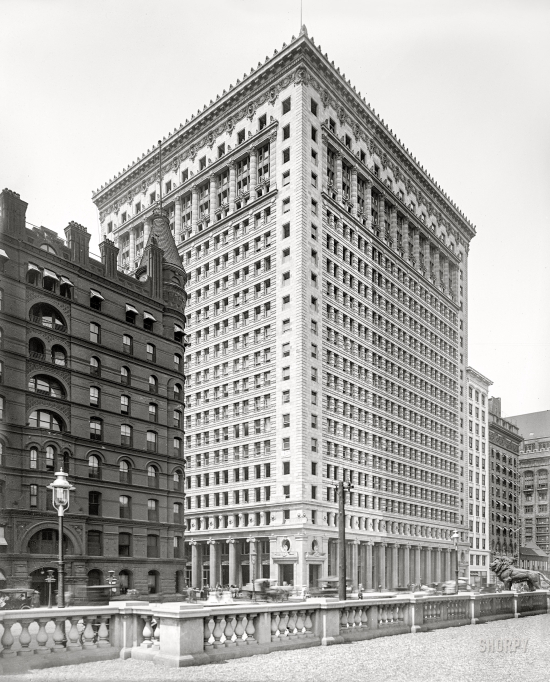
[Photo: Shorpy/Detroit Publishing Company]
And in 2017:

[Photo: TimeAndAgainPhoto]
=”asset-img-link” href=”https://mickhartley.typepad.com/.a/6a00d83451ebab69e20263e986de66200b-pi” style=”display: inline”>
Cafe on Cranbrook Rd, Ilford, Redbridge, 1992

Farina’s Cafe, Poplar High St, Tower Hamlets, 1988

Cafe on White Hart Lane, Tottenham, 1991
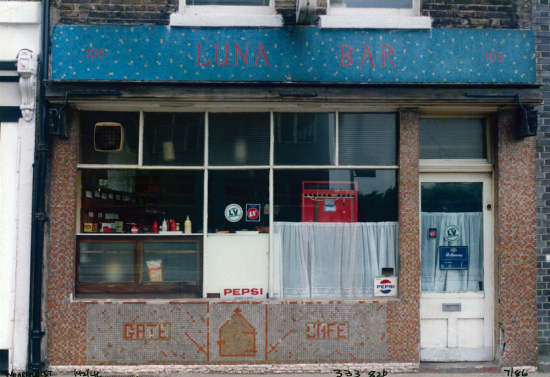
Luna Bar on Worship St, Shoreditch, 1986

Blackwall Tunnel approach, Bromley by Bow, 1988

Stoke Newington High St, 1989
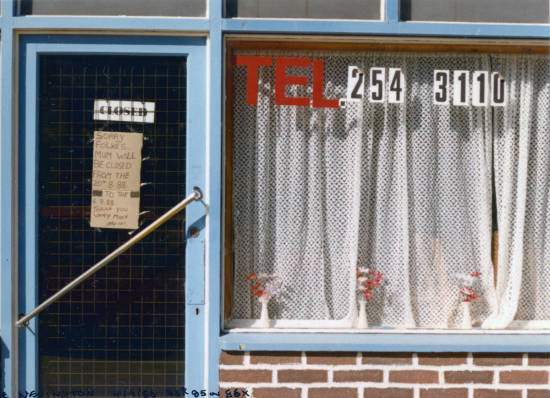
Stoke Newington Rd, Shacklewell, 1989
The Classic Cafes website, devoted to "The Very Best of London's Vintage Formica Caffs", is still there, but hasn't been updated for ages.
The same applies to Russell Davies' quirky Eggs Bacon Beans and Chips, though that extended its brief beyond London.
Iranians are now denied vaccines, thanks to the closed-mindedness and stupidity of their leaders:
Supreme Leader Ayatollah Ali Khamenei Friday banned Iran from importing American Pfizer-BioNTech and Britain’s Astrazeneca COVID-19 vaccines, a reflection of mistrust toward the West.
In a televised speech, he said the import of American and British vaccines was “forbidden,” referring to the surging death tolls from the virus in both countries.
”I really do not trust them,” Khamenei said of those nations. “Sometimes they want to test” their vaccines on other countries, adding, “I am not optimistic (about) France,” either.
Iran has struggled to stem the worst virus outbreak in the Middle East….
Hardliners in Iran have long opposed the US-made vaccines. Iran’s Revolutionary Guard in December rejected the use of foreign-made vaccines altogether. Gen. Mohammad Reza Naghdi said the Guard “does not recommend the injection of any foreign vaccine” candidates based on genetic material known as messenger RNA, which carries the instructions for cells to make proteins.
They're developing their own vaccine, though, which "is expected to hit the local market in spring". So not to worry…
Sarah Vaughan, live in Sweden, 1964. Complains she has a cold, but you wouldn't know…
[youtube=https://www.youtube.com/watch?v=lJXLqAutql4&w=550&h=309]
Originally an instrumental by Erroll Garner, before lyrics were added by Johnny Burke. It became the signature tune of Johnny Mathis, but really everybody sang it, from Sinatra and Ella Fitzgerald to Ray Stevens' Country take. No one better than this, though.
I've featured a couple of songs from this show already:
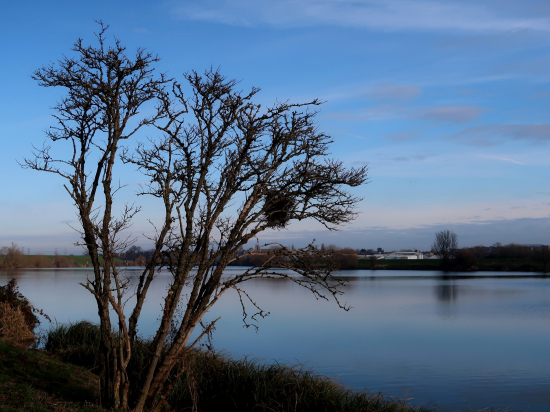
And, talking of wetlands….
Starlings at Dusk 15/12/2020 RSPB Ham Wall from Jackie Curtis on Vimeo.
That's Somerset – the Avalon marshes.
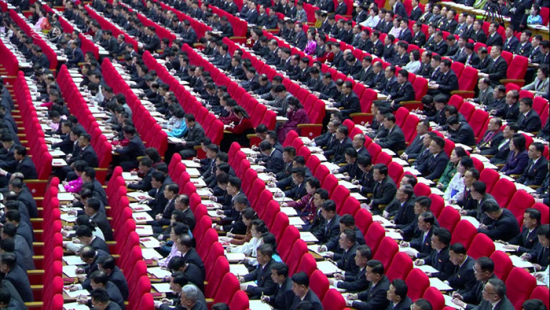
a, with which it conducts 90 per cent of its external trade. Odd, then, to see no masks or distancing at the congress in this screenshot from North Korean Central Television. But they claim not to have had any cases – so, I suppose, no need: